July 2024 to July 2026
€522,000


Innovation Local radio stations Misinformation
The RadioCheck Togo project relies on a unique combination: rigorous fact-checking, local languages and popular humour. A winning mix that transforms the fight against disinformation into a collective experience.
In northern Togo, on the edge of the dry savannah and the red dirt tracks linking villages and markets, information circulates through local radio stations and WhatsApp messages. In a region already weakened by security concerns stemming from the expansion of jihadist groups in the Sahel, rumours run rife against a backdrop of daily anxiety. And disinformation is eating away at society. But for the past two years, an unexpected counter-offensive has been taking shape: it speaks in local languages, is broadcast on the airwaves and via mobile phones, and relies on… humour! Convincing people through laughter – that is the approach taken by the RadioCheck Togo project.
At first glance, the venture may seem daring. In these regions where French is not always the everyday language, the battle against fake news is fought primarily in local dialects. The heart of the initiative rests on an unprecedented collaborative effort. Twelve local radio stations, deeply rooted in their communities, identify and report rumours, disinformation and manipulation circulating within their broadcast areas. These reports, often picked up during a conversation or via a WhatsApp message, are then passed on to TogoCheck, one of the most reputable fact-checking organisations in French-speaking Africa.
The TogoCheck team debunks dubious claims and produces verified content in the form of clear and accessible audio reports. But the process doesn’t stop there. Once produced, these segments are sent to partner radio stations, which translate them into several local languages before broadcasting them. This choice to use multiple languages is no coincidence. It has already helped to defuse disinformation campaigns that were sometimes highly targeted, with some specifically aimed at France or the French army. Where top-down information would fail, a message relayed by a local radio station, in a familiar language, gains credibility. To date, 64 fact-checking audio segments have been produced, translated and broadcast. The result: continuous exposure for over 1.6 million people to verified, contextualised and, above all, understandable information.
RadioChek Togo goes even further. Recognising that disinformation cannot be combated with facts alone, the project incorporates a strong cultural element: humour. TogoCheck therefore produces short video clips that dissect the mechanisms of information manipulation, drawing on the talents of local comedians. These popular figures have a firm grasp of the social conventions and comic sensibilities specific to their audiences. In these 32 short videos, laughter becomes an educational tool. It allows viewers to take a step back, to question what is taken for granted, and to reveal the absurdity of certain rumours. Above all, it encourages sharing. Widely shared on social media (particularly WhatsApp, the main vehicle for disinformation in the region), this content circulates rapidly, reaching audiences who are sometimes far removed from traditional media.
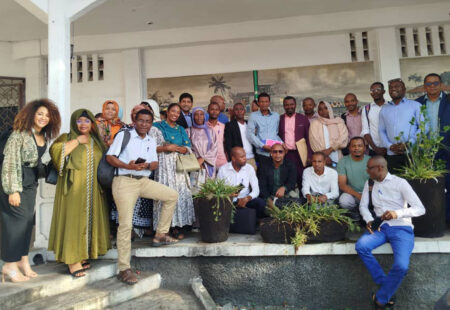
At the same time, the project is investing in building the capacity of partner radio stations. Twelve journalists have been trained in the fundamentals of journalism, a further twelve in the fundamentals of fact-checking, and another twelve in translating and adapting audio programmes into local languages. Editorial and technical support enables them to produce their own short awareness-raising programmes, rooted in the everyday concerns of their listeners. Computers, recorders, mixing desks… This material support ensures the network’s long-term viability and strengthens the radio stations’ autonomy. Because beyond the content produced, a sustainable ecosystem for tackling disinformation is also being built.
Funded by the CDCS of the Ministry for Europe and Foreign Affairs, and implemented by CFI in partnership with Coaweb, RadioChek Togo is a long-term initiative running from July 2024 to July 2026. This timeframe is necessary to embed best practices, strengthen ties and foster new habits when it comes to engaging with information. In a context where mistrust of institutional sources can fuel manipulation, the project prioritises community engagement, collective intelligence and creativity. Here, the fight against disinformation involves not only fact-checking, but also bringing facts to life. And sometimes, a burst of laughter.
A project
Supported by
In partnership with