April 2024 - November 2026
861,000 euros


Democratic governance Gender equality
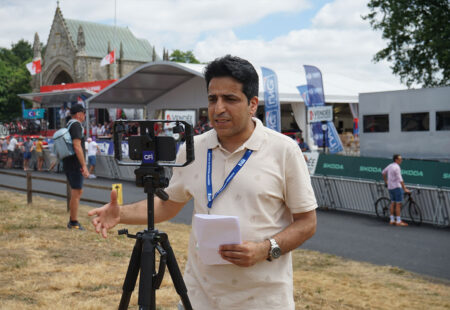
For a long time, Nchidzi Masendu worked like many journalists: unconsciously replicating certain narrative habits without always realising it. Thanks to the Media Parity project led by CFI and Gender Links, this Botswanan reporter at the Week-End Post has begun to question the way he writes about women, chooses his sources and approaches his role in the newsroom.
The low-key journey of a journalist who, step by step, has become an advocate of positive masculinities.
In Gaborone, the capital of Botswana, Nchidzi Masendu observes more than he seeks to take centre stage. At first, the journalist with the calm voice comes across as a reserved man. His commitment has not been forged in the clamour of publicly proclaimed convictions, but through a gradual re-examination of his own habits. In newsrooms across southern Africa, where hierarchies and established practices still largely shape media narratives, he worked for a long time like so many others: seeking out the most accessible sources – often male – and unwittingly replicating certain narrative habits. Then something changed. As a participant in the Media Parity project, led by CFI and Gender
Links in five southern African countries, he took part in training workshops on gender-sensitive journalism and positive masculinities. It was an experience that profoundly shifted his perspective on his profession. And on himself.
When did your perspective change?
The real turning point came when I began to analyse my own way of telling stories involving women. I realised that, even without any particular intention, I could be reinforcing stereotypes through my choice of sources, the angle I took or the language I used. This realisation prompted me to be much more mindful of inclusion and balance in my work.
In practical terms, what do these imbalances still look like in the media in southern Africa?
Women remain under-represented as experts or figures of authority. On many topics, men continue to dominate the discourse when it comes to commenting on politics, the economy or public affairs. Male perspectives are often regarded as the norm.
Why do you think these patterns persist?
Because they are deeply ingrained in the professional and cultural practices of newsrooms. Women are under-represented as experts or decision-makers on these topics. They are quoted less frequently, whilst men dominate commentary in fields such as politics, the economy and business. Journalists often rely on familiar sources, the vast majority of whom are men. Without a conscious effort to change, these patterns will continue.
The Media Parity project aims precisely to bring about a shift in journalistic practices.
How has this changed the way you work?
Nowadays, I pay closer attention to the people I interview and the voices I highlight. I actively seek to include more female experts and to avoid narratives that reinforce stereotypes. Even my choice of words has become more deliberate. There is a lot of talk about supporting female journalists.
What role should men play?
Men must play their part in this transformation. This means supporting more inclusive practices, challenging existing biases and being open to learning. They also have a particular responsibility because they still hold many positions of power in newsrooms.
Do some men feel excluded from these conversations?
Yes, sometimes. Some still believe that gender equality is solely a women’s issue. Others want to get involved but aren’t quite sure how to go about it. That is why it is important to create inclusive spaces for dialogue.
During the workshops on positive masculinities, what stood out to you the most?
I realised that simply being ‘neutral’ isn’t enough. Silence or inaction can also contribute to perpetuating inequalities. The accounts given by female journalists about their day-to-day experiences in newsrooms were particularly striking. They brought to light realities that are often overlooked.
How would you define ‘positive masculinity’?
It means using one’s position as a man to promote respect, fairness and inclusion. This involves being aware of one’s own biases, listening more and actively contributing to a fairer environment.
Does adopting this approach require courage?
Yes, because these issues can still be sensitive in certain work environments. It requires a willingness to challenge certain habits and to champion alternative ways of working.
What makes you feel optimistic today?
I’m seeing more and more journalists rethinking the way they tell stories. The change is gradual, but there’s a genuine desire to move towards more representative and inclusive media.
A project

Supported by
In partnership with